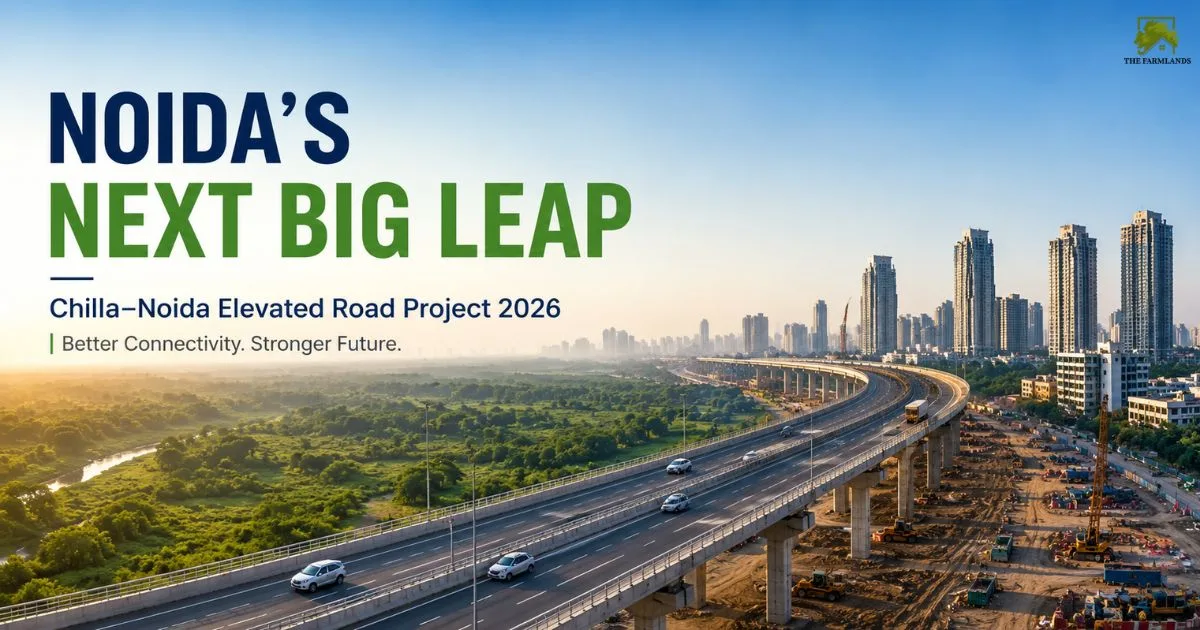
Delhi NCR’s infrastructure landscape continues to evolve rapidly, and one of the latest developments attracting attention is the ongoing elevated road project connecting Chilla Regulator in Delhi to Mahamaya Flyover and MP-3 Marg in Noida.
Recently, officials from the Noida Authority inspected the progress of the project and confirmed that nearly 50% of the construction work has already been completed. The project is expected to significantly improve traffic movement between Delhi and Noida while strengthening connectivity across some of NCR’s busiest corridors.
But beyond reducing travel time, projects like these often have a much larger impact — especially on urban expansion, investment patterns, and real estate growth.
In this blog, we explore the Noida elevated road project, its importance for NCR residents, and why infrastructure development continues to shape the future of real estate around the Noida growth corridor.
What Is the Chilla–Noida Elevated Road Project?
The project is a major 6-lane elevated road corridor being developed from Chilla Regulator (Delhi) to Mahamaya Flyover and MP-3 Marg in Noida.
According to the NOIDA Authority press release:
- Total Length: 5.570 km
- Configuration: 6-lane elevated road
- Estimated Cost: ₹892.75 crore
- Current Status: Around 50% completed
The project is designed to ease severe congestion between Delhi and Noida, especially during peak office hours when traffic movement on existing roads often becomes heavily saturated.
The inspection was carried out by officials from the NOIDA Authority along with senior engineering and bridge corporation teams to review construction progress and future expansion planning.
Why This Infrastructure Project Matters
For daily commuters in NCR, traffic congestion has become a routine challenge. Key routes connecting Delhi, Noida, and Greater Noida regularly experience heavy traffic pressure, particularly around:
- Chilla Border
- Mahamaya Flyover
- Noida Expressway
- Kalindi Kunj
- Sector 94 and adjoining corridors
The elevated road aims to reduce bottlenecks by creating a faster and more streamlined traffic movement system.
Once operational, the project is expected to:
- Improve Delhi–Noida connectivity
- Reduce congestion on existing surface roads
- Support smoother movement toward Sector 150 and Noida Expressway
- Divert some traffic away from overloaded routes
- Improve travel efficiency for office commuters and residents
In large metropolitan regions, infrastructure projects like these often become the backbone of future urban growth.
Planned Future Connectivity Expansion
One of the most important updates from the press release is that authorities are also planning future connectivity extensions linked to this corridor.
Officials stated that the elevated road may eventually connect further through:
- The Shahdara drain corridor
- Kalindi Kunj Road
- Pushta Road near Sector 94
A DPR (Detailed Project Report) is currently being prepared by IIT Roorkee for the proposed connectivity expansion.
If completed successfully, this network could further improve movement between:
- Mayur Vihar
- Noida
- Sector 150
- Noida-Greater Noida Expressway region
This is particularly important because infrastructure connectivity tends to influence how cities expand over the next decade.
Infrastructure and Real Estate Growth Are Closely Connected
Across India, some of the strongest real estate growth stories have historically followed infrastructure expansion.
Whether it was:
- Gurgaon after the expressway boom,
- Noida after metro connectivity,
- Dwarka after highway upgrades,
- or Greater Noida after the Yamuna Expressway,
the pattern remains similar:
better infrastructure usually attracts more residential and commercial demand.
Improved roads do more than reduce travel time. They often:
- Increase accessibility
- Improve convenience
- Expand development zones
- Encourage investment activity
- Increase long-term land value
This is one of the reasons investors closely track infrastructure announcements before making long-term real estate decisions.
Why Connectivity Matters More Than Ever in NCR
Over the last few years, buyer preferences in NCR have started shifting.
Earlier, many buyers focused mainly on proximity to city centers. Today, people are also prioritizing:
- Open spaces
- Lower-density living
- Better environmental quality
- Weekend accessibility
- Long-term lifestyle value
At the same time, they still want strong connectivity to Delhi and major urban hubs.
This balance between accessibility and space is becoming increasingly important in areas surrounding the Noida growth corridor.
As new infrastructure projects improve travel efficiency, regions that were previously considered “far” begin feeling significantly more connected.
The Rising Demand for Land and Open-Space Living
Urban density, traffic pressure, rising temperatures, and limited open spaces have also contributed to a growing interest in:
- Land ownership
- Second homes
- Weekend retreats
- Nature-connected developments
- Low-density lifestyle projects
This trend has become particularly visible among buyers from Delhi NCR looking for a balance between city access and peaceful living environments.
Unlike high-density urban apartments, land-based developments provide:
- More privacy
- Greater flexibility
- Long-term ownership value
- Lower density surroundings
- A stronger connection to nature
As infrastructure continues expanding outward from Delhi and Noida, these types of developments are gradually becoming more accessible.
What This Means for Future Growth Corridors
The Noida–Greater Noida region continues to witness major infrastructure investment through:
- Expressways
- Elevated roads
- Metro expansion
- Airport connectivity
- Industrial and commercial growth
As these developments progress, nearby low-density regions are also attracting increasing attention from buyers and investors.
Areas connected to the Noida growth belt are likely to benefit from:
- Improved accessibility
- Increased investor interest
- Faster regional development
- Better long-term growth potential
This is especially relevant for people looking beyond traditional apartment-based investments.
The Farmlands: Nature-Led Living Near the Noida Growth Corridor
As infrastructure expansion continues across NCR, interest in open-space developments near major connectivity corridors is steadily rising.
Projects like The Farmlands reflect this growing shift toward land ownership and nature-connected living.
Located in Maozmabad, Faridabad, in close proximity to the Noida growth corridor, The Farmlands offers:
- 1 Acre Premium Organic Farmland
- Close proximity to Noida Expressway
- Opposite Noida International Golf Course, Sector 151A
- Ideal setting for second homes and weekend gateways
- A peaceful low-density environment connected to NCR
As connectivity improves across Delhi NCR, developments that combine accessibility with open living environments are increasingly becoming part of the region’s long-term lifestyle and investment conversation.
Conclusion
The Chilla–Noida Elevated Road project represents more than just another infrastructure upgrade. It reflects the larger transformation taking place across NCR — where connectivity, urban expansion, and lifestyle preferences are evolving together.
For residents, the project could mean smoother travel and reduced congestion. For investors and homebuyers, it highlights how infrastructure development continues to influence future growth corridors and real estate demand.
As Noida and surrounding regions continue expanding, infrastructure-led growth is likely to remain one of the biggest drivers shaping the future of NCR real estate.
Read more about Noida Real Estate: Noida Real Estate: Market Trends, Best Sectors and Investment Guide